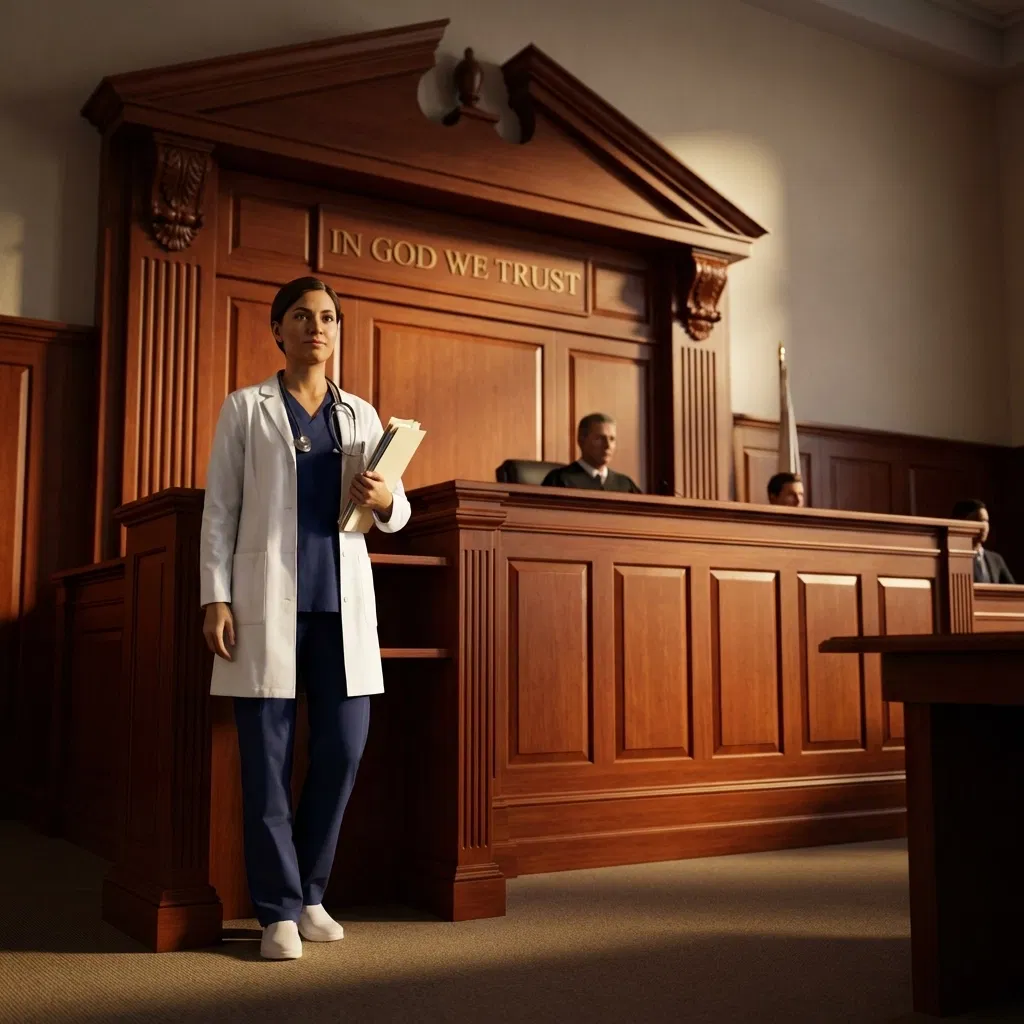

You have three seconds to lose a jury. That is the reality of the modern courtroom. If you walk in with a 400-page medical file and expect twelve laypeople to connect the dots between an obscure lab result and a life-altering diagnosis, you are gambling with your client’s future.
Juries do not read medical records. They watch stories.
To win a high-stakes personal injury case, you need more than just raw data; you need a narrative that is both medically sound and visually undeniable. This is where the synergy between a precision-engineered medical chronology and strategic trial graphics becomes your greatest asset. At OnPoint Legal Nurse Consulting, we have spent over 25 years perfecting the art of bridging the gap between complex medicine and the law.
Here is how you integrate these two powerhouses to ensure your case resonates from opening statement to verdict.
The Chronology is Your Master Blueprint
Every winning case starts with a rock-solid foundation. In personal injury litigation, that foundation is the medical chronology. Think of it as the master blueprint for your entire legal strategy.
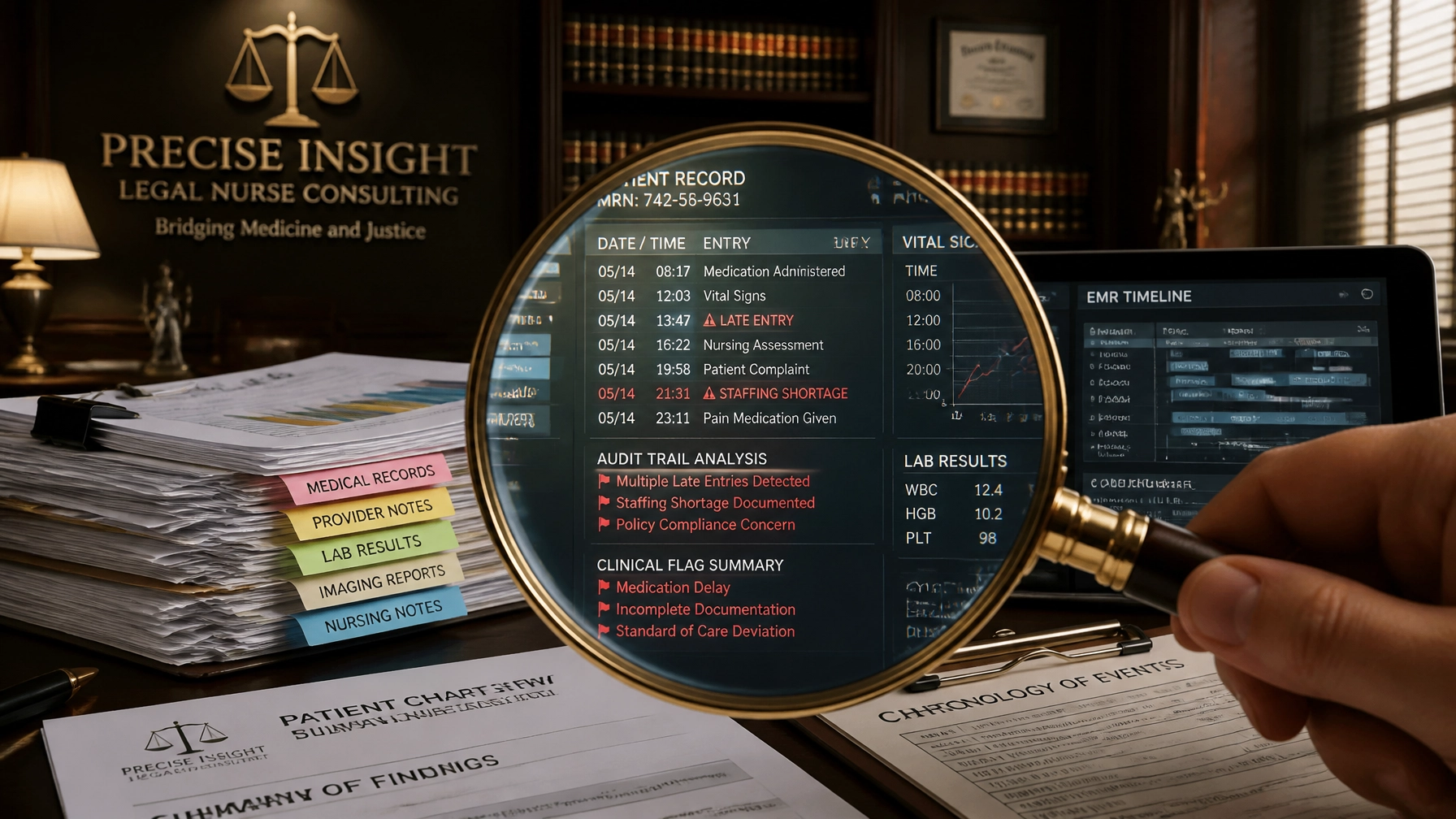
A high-quality medical chronology: the kind provided by professional legal nurse consulting services: is not just a list of dates. It is a time-ordered account that filters out the noise and highlights the "smoking guns" hidden within thousands of pages of records. It identifies the diagnoses, the surgeries, the gaps in care, and most importantly, the causation links.

If your chronology is messy, your trial graphics will be confusing. If your chronology is incomplete, your graphics will be vulnerable to impeachment. You must treat the chronology as the "single source of truth." When your expert stands in front of a jury, every date, every medication dose, and every surgical detail on that screen must tie back directly to the verified chronology.
Turning Data into Storytelling: The Power of Trial Graphics
If the chronology is the script, the trial graphics are the film. Humans are visual creatures. Studies consistently show that we retain significantly more information when it is presented visually rather than orally.
When you use personal injury consulting that includes custom trial graphics, you aren't just making things "look pretty." You are simplifying the complex. You are taking a dense narrative summary and distilling it into a 15-second visual "aha!" moment for the jury.
Consider these essential visual tools:
- Medical Journey Timelines: A one-page visual roadmap of the plaintiff’s treatment: from the initial incident through rehabilitation to the current permanent restrictions.
- Mechanism of Injury Illustrations: Showing exactly how the impact or error damaged the body.
- Treatment Progression Charts: Visualizing the escalation of care, such as moving from physical therapy to invasive spinal injections.
Why Integration is Non-Negotiable
Integration is where most attorneys miss the mark. They hire one firm for the "nursing stuff" and another for the "graphics stuff." The result? A disjointed presentation that feels like two different cases.
At OnPoint, we believe these services should live under one roof. Our Legal Nurse Consulting Services are designed to feed directly into our graphic design process. When a clinician who understands the medical nuance of a stage 3 pressure ulcer (see graphic below) works directly with a graphic designer, the result is a demonstrative that is medically accurate and legally lethal.

When your graphics are built directly from your chronology fields, you eliminate the risk of "gotcha" moments from the defense. Your expert's testimony becomes a seamless walk-through of a visual story that is already anchored in the evidence.
Strategic Use Cases for the Courtroom
How do you actually deploy this integrated approach at trial? You use it to hit the three pillars of your case: Liability, Causation, and Damages.
1. Proving Liability and Causation
Use "Pre- vs. Post-Injury" comparison timelines. The defense loves to argue that your client’s pain is just "wear and tear" or a pre-existing condition. An integrated graphic pulls the pre-accident records (identified in your chronology) and pits them against the post-accident diagnostic imaging. When the jury sees a clear "Line of Demarcation" where the health of the plaintiff plummeted, the defense's "old injury" argument evaporates.
2. Demonstrating the Intensity of Pain
Pain is subjective, which makes it hard for juries to quantify. However, you can make it objective by integrating a "Pain Medication Summary Chart." By pulling every Morphine and Dilaudid administration from the chronology and plotting it on a bar chart, you show the jury the sheer volume of drugs required just to make the plaintiff's life bearable.

3. Visualizing Damages
A future care roadmap takes the prognosis entries from your chronology and extends the timeline into the future. It shows the jury that the plaintiff isn't just hurt today: they are facing decades of surgeries, physical therapy, and medication. It turns an abstract dollar amount into a tangible medical reality.
The OnPoint Advantage: 25 Years of Expertise
Why does this matter? Because the opposition is doing their homework, too. You cannot afford to walk into a deposition or trial with a surface-level understanding of the medical records.
Since 1995, OnPoint Legal Nurse Consulting has been the bridge between medicine and the law. We provide clinically active experts: people who are actually in the field, treating patients: to ensure your case strategy is built on current medical standards.

Our team approach means you aren't just getting one person's opinion; you are getting a collective brain trust that knows how to spot missing records, identify hidden pitfalls, and create the compelling visuals needed to maximize your case value. Whether you are handling a complex medical malpractice suit or a straightforward personal injury case, our narrative summaries and analysis provide the clarity you need to win.
Don't Let Complex Records Tank Your Case
The difference between a mediocre settlement and a record-breaking verdict often comes down to communication. Can you make the jury care about the medicine? Can you make them understand the injury as clearly as the doctor does?
If you are overwhelmed by a mountain of medical records or struggling to find a way to make the technical data "pop" for a jury, it is time to bring in the experts. Don't wait until the discovery deadline is looming to start your integration strategy.
Ready to transform your medical evidence into a winning visual narrative? Contact OnPoint Legal Nurse Consulting today to discuss how our integrated chronology and trial graphics services can give you the winning edge.