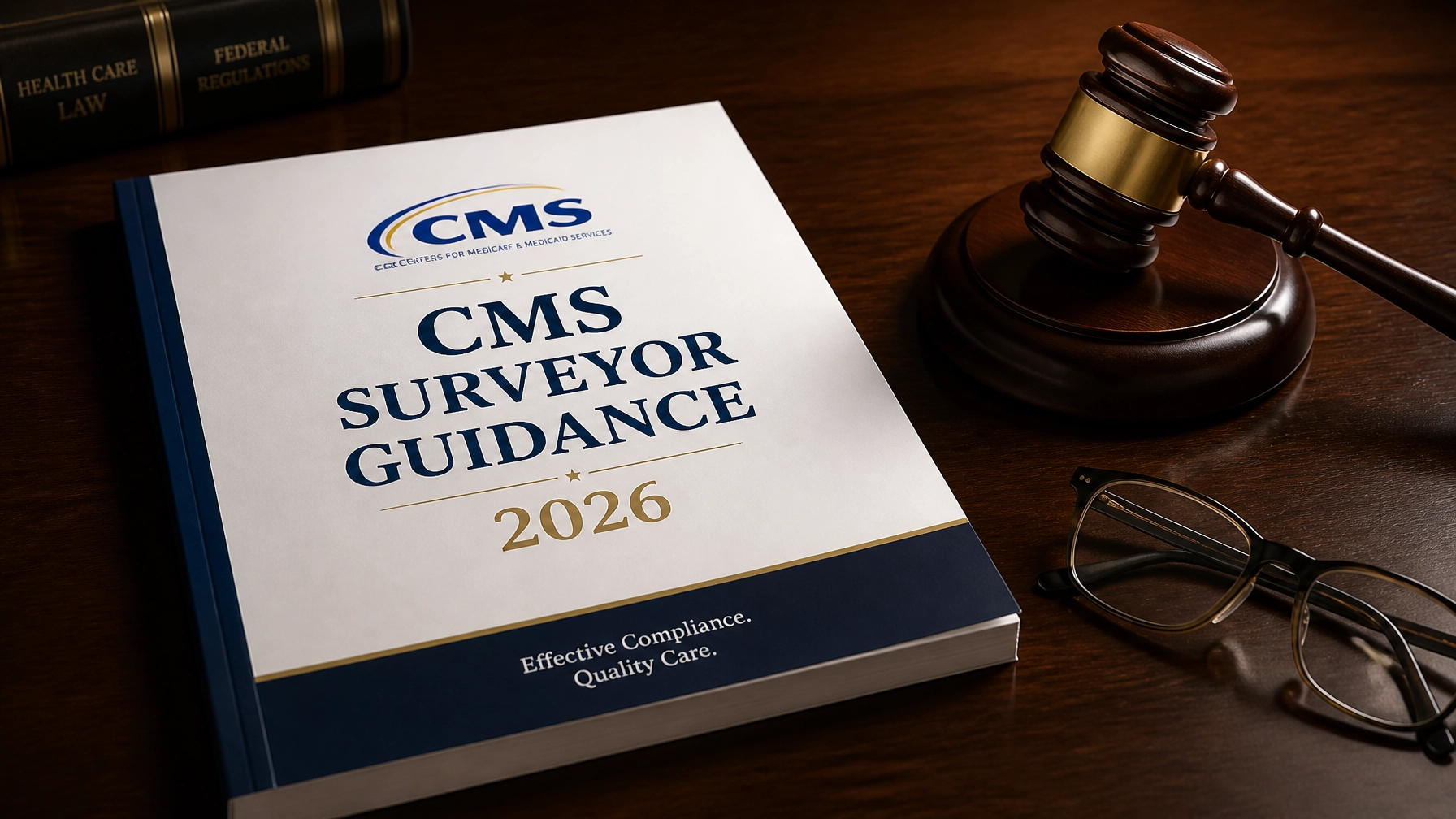

The landscape of nursing home litigation just shifted. If you’re a plaintiff’s attorney handling medical malpractice or elder abuse cases, you know that the "standard of care" isn't a static target, it’s a moving one. As of June 2026, the Centers for Medicare & Medicaid Services (CMS) has dropped a new playbook in the form of updated surveyor guidance.
This isn't just bureaucratic red tape. It is a roadmap for proving negligence. These updates change how surveyors investigate facilities, how they penalize bad actors, and, most importantly for you, how you build your case. If you aren't using the QSO-26-03-NH memo as the backbone of your discovery, you're leaving money on the table and letting negligent facilities off the hook.
At OnPoint Legal Nurse Consulting, we’ve spent over 25 years bridging the gap between clinical complexity and legal strategy. We’ve dissected these new regulations so you don’t have to. Here are the 10 critical things you need to know about the 2026 CMS Surveyor Guidance to stay ahead of the opposition.
1. The "Five-Hour Rule" for Onsite Surveys
In the past, a survey team might pop in, glance at some charts, and head out. Not anymore. The 2026 guidance mandates that survey teams must remain onsite for at least five consecutive hours on the first day of an entrance.
Why does this matter? Because nursing homes are notorious for "polishing the silver" when they see a surveyor walk in. By staying longer, surveyors are more likely to witness the chaos of a shift change or the evening "sundowning" rush where staffing falls apart. If the survey report shows a citation on day one, you now have evidence that the facility couldn't even keep up appearances for a full afternoon.
2. Mandatory Consecutive Calendar Days
CMS is tired of "weekend gaps" where facilities magically improve their care levels because they know the state inspectors are off the clock. For standard surveys, the first two days must now be on consecutive calendar days.
This eliminates the facility's ability to "reset" or bring in agency staff to cover up chronic shortages over a weekend. If a surveyor finds a deficiency on day two that wasn't there on day one, it proves the facility is reactive, not proactive. This is gold for establishing a pattern of systemic failure.

3. Public "Per-Instance" CMPs on Care Compare
Starting June 24, 2026, Per-Instance Civil Money Penalties (CMPs) will be publicly displayed on the Nursing Home Care Compare website. Previously, these one-time penalties for specific incidents were often buried.
Now, you can show a jury that CMS specifically penalized a facility for the exact type of injury your client suffered. It turns a "one-off accident" defense into a "publicly recorded failure." This transparency makes case selection easier and gives you immediate leverage during settlement negotiations. You don't have to wait for discovery to see the facility's dirty laundry; it’s right there on the web.
4. The Shift to Acuity-Based Staffing
The federal government rolled back fixed nursing-hour ratios in 2025, but don’t let the defense tell you that means staffing requirements are "looser." The 2026 guidance doubles down on acuity-based staffing. Facilities must prove their staffing levels match the actual clinical needs of their specific resident population.
If a facility has 50 residents with Stage IV pressure ulcers and only one RN on duty, they are in violation, regardless of what the state minimum ratio says. Our legal nurse consultants specialize in correlating Payroll-Based Journal (PBJ) data with patient acuity to prove that the "minimum" was nowhere near "sufficient."

5. Psychotropic Surveillance: The End of Chemical Restraints
CMS has a zero-tolerance policy for using medication to "manage" difficult residents. The updated guidance for 2026 increases scrutiny on antipsychotics, antidepressants, and even certain antihistamines used to sedate patients.
Surveyors are now directed to look for "gradual dose reduction" (GDR) attempts. If the facility hasn't tried to lower the dose, or if they’re using these drugs without a clear, documented clinical diagnosis, they are using chemical restraints. This is a massive red flag in wrongful death and fall cases where over-sedation is almost always a contributing factor.
The same pattern shows up in investigative reporting. ProPublica’s work on nursing homes has repeatedly exposed how medication misuse signals deeper systemic neglect, and its reporting on the mishandling of blood thinners like warfarin is a prime example. When anticoagulants are poorly monitored, doses are missed, or contraindications are ignored, the result is predictable: preventable bleeds, strokes, hospitalizations, and death. Those are not isolated charting mistakes. They are warning flares. At OnPoint, we identify those same red flags inside the MARs, physician orders, lab trends, INR results, nursing notes, and hospital transfer records so your case theory rests on hard clinical proof, not just suspicion.
6. Photography and Digital Privacy Revisions
The 2026 memo clarifies how surveyors use photography during investigations. There is a heightened focus on how staff protect, or fail to protect, resident privacy with electronic information.
If a surveyor took photos of a resident’s wound or a hazardous environment, that photo exists in the state’s file. You need to get it. These images often provide the most visceral evidence of neglect that a written report simply cannot capture. We help attorneys navigate the process of identifying and interpreting this digital evidence.
7. Expanded Use of Abbreviated Surveys
CMS is now using abbreviated surveys more aggressively for complaints and changes in ownership. If a facility was recently bought by a private equity firm and care plummeted, an abbreviated survey is the tool CMS uses to catch them.
These surveys are laser-focused. When you see an "abbreviated survey" deficiency, it’s not a general critique, it’s a targeted strike on a specific problem. This makes it much harder for the defense to argue that the deficiency is "unrelated" to your client's specific injury.
8. MDS Accuracy and "Masking" Decline
The Minimum Data Set (MDS) is the facility's self-report card. The 2026 guidance significantly increases penalties for erroneous MDS coding. Why? Because facilities often "up-code" to get more reimbursement while "down-coding" a resident’s decline to avoid triggering a survey.
If the MDS says a resident is "independent" but the nursing notes say they need two-person assistance for transfers, you have a fraud issue and a negligence issue. We catch these discrepancies every day. An accurate MDS is the baseline for a care plan; if the baseline is a lie, the care plan is worthless.

9. Transfer and Discharge "Dumping" Scrutiny
One of the cruelest practices in the industry is "resident dumping", discharging a high-needs resident to a hospital or a different facility without proper notice or a safe plan. The 2026 guidance provides surveyors with a stricter checklist for discharge rights.
Every discharge must have a documented clinical reason and a confirmed, safe destination. If the facility skipped these steps, they didn't just break a rule; they abandoned a vulnerable person. This is an open-and-shut case for negligence when that resident inevitably suffers a "transfer trauma" injury.
10. The Five-Day F609 Reporting Clock
When abuse or neglect is suspected, the facility doesn't get weeks to "internally investigate." The guidance for F609 compliance requires that all investigations be reported to authorities within five working days.
If they waited six days, they’re in violation. If they never reported it at all, you have evidence of a cover-up. This timeline is non-negotiable. It’s a simple "yes/no" question in a deposition that can immediately dismantle the credibility of a Nursing Home Administrator.
How OnPoint Bridges the Gap
You’re an expert in the law, but you shouldn't have to be an expert in the 800-page CMS State Operations Manual. That’s where we come in. The 2026 guidance is a powerful tool, but only if you know how to wield it.
This is also where strong litigation support starts to look a lot like strong investigative journalism. ProPublica’s Nursing Home Inspect database gives attorneys a public-facing window into inspection histories, deficiencies, and patterns that facilities would rather downplay. Useful? Absolutely. But databases and headlines only get you so far. They tell you something is wrong. They do not tell you exactly how the harm unfolded in the chart, who missed what, when the decline became obvious, or how the facility’s own records contradict its defense.
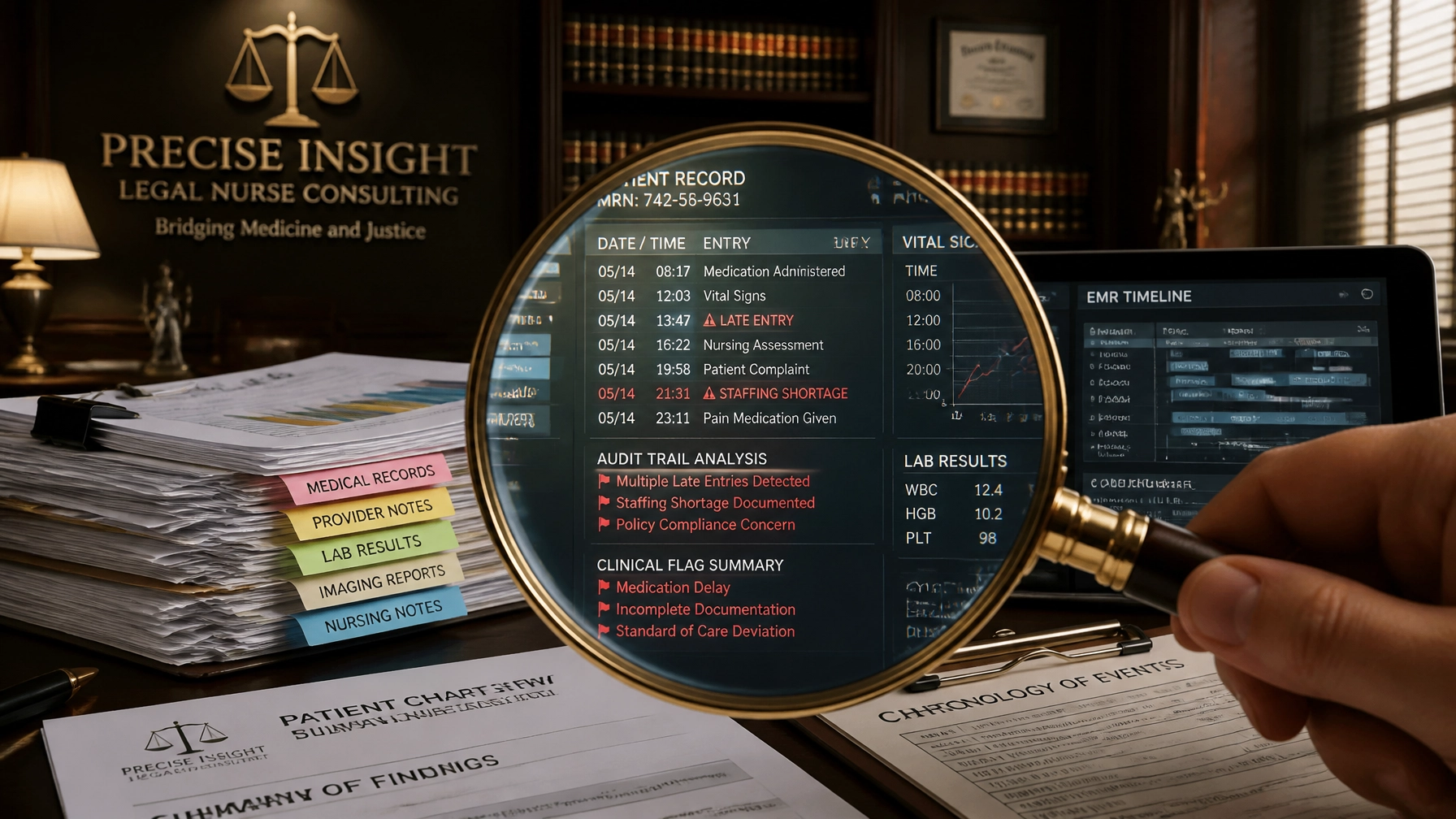
That is the gap OnPoint closes every day. We connect the public red flags seen in resources like Nursing Home Inspect with the raw medical record evidence that actually drives case value. We trace staffing failures, missed assessments, medication errors, untreated wounds, transfer delays, and documentation gaps back to the resident’s outcome. In other words, we bring the same investigative depth you see in ProPublica’s nursing home reporting into the litigation record, then turn it into a clear, medically grounded theory of negligence your jury can understand.
Our team of vetted, clinically active experts provides the comprehensive medical record review and case merit assessments you need to win. We don't just find the red flags; we explain why they matter and how they link directly to the updated CMS standards.
Don't let the defense hide behind "regulatory compliance" when you know the care was subpar. Let us help you turn these new surveyor guidelines into a winning strategy.
Ready to strengthen your case? Contact OnPoint Legal Nurse Consulting today and let’s get to work.