There's a question every plaintiff attorney faces at some point: When do I bring in the expert?
The answer used to be straightforward: somewhere between discovery and trial prep. But that playbook is outdated. The most successful plaintiff firms in the country are flipping the script entirely, engaging medical experts and legal nurse consultants before they even file the complaint.
Welcome to the era of the proactive plaintiff.
The "Maryland Model" Is Going National
Maryland has led the charge with Certificate of Qualified Expert requirements that essentially mandate early expert review in medical malpractice cases. You can't file without an expert opinion backing your claim. While some attorneys initially saw this as a burden, the sharp ones quickly realized it was a competitive advantage.
Here's why: The Maryland Model forces you to validate your case before you invest significant time and resources. It pushes you to identify weaknesses early. It makes you sharper, faster, and better prepared than your opposition from day one.
And now? Plaintiff attorneys across the country are adopting this model voluntarily: not because a statute requires it, but because it wins cases and maximizes settlement value.

Early Engagement Changes Everything
Let's be clear: Experts aren't just courtroom showpieces. When you bring them in early: during initial case evaluation or pre-suit investigation: they become strategic partners who influence every decision you make.
They shape your legal strategy. A qualified legal nurse consultant or medical expert can review records and identify liability issues you might miss on your own. They pinpoint causation gaps, standard-of-care violations, and damages elements before you've committed to a theory of the case.
They guide your discovery. Instead of casting a wide net and hoping you catch something useful, your expert tells you exactly which records matter, which witnesses to depose first, and what questions to ask. You're not scrambling mid-discovery to figure out why the defense just buried you with irrelevant documents: you already knew what to request.
They inform settlement negotiations. An early expert opinion gives you a realistic assessment of case value before you've spent a dime on litigation. You know whether you're looking at a six-figure settlement or a seven-figure verdict. That knowledge dictates everything from demand letters to mediation strategy.
Avoiding the Hidden Pitfalls
Here's the uncomfortable truth: Most attorneys don't lose cases because they're bad lawyers. They lose because they missed something critical in the medical records: something a trained eye would have caught in the first 48 hours.
Maybe it's a pre-existing condition that torpedoes causation. Maybe it's a gap in documentation that makes liability harder to prove. Maybe it's a timeline issue that creates reasonable doubt about when the injury actually occurred.
By the time you discover these problems six months into litigation, you've already sunk significant costs into the case. You've made promises to your client. You've built a narrative. And now you're stuck trying to salvage something that should never have been filed in the first place.
Early expert review eliminates this risk. A legal nurse consultant or medical expert can conduct a thorough pre-suit review and deliver a frank assessment: This case has merit, or it doesn't. You avoid chasing bad cases and invest your resources where they'll actually pay off.

Settlement Leverage You Can't Fake
Defense attorneys aren't stupid. They know when you're bluffing. They can smell a weak case from across the conference table.
But when you walk into mediation with a fully developed expert opinion: backed by a comprehensive medical chronology, documented standard-of-care violations, and clear causation analysis: the dynamic shifts entirely. You're not negotiating from hope. You're negotiating from strength.
The defense knows you've done your homework. They know you have an expert who's ready to testify. They know their client is exposed. And suddenly, that lowball offer becomes a serious settlement discussion.
Early expert engagement doesn't just increase case value: it proves case value to the opposition before anyone wastes time and money on protracted litigation.
Cost Predictability Matters
One of the biggest objections to early expert engagement is cost. "Why should I spend money on an expert before I even know if I'm taking the case?"
Flip that question around: Why would you take a case without knowing if it has merit?
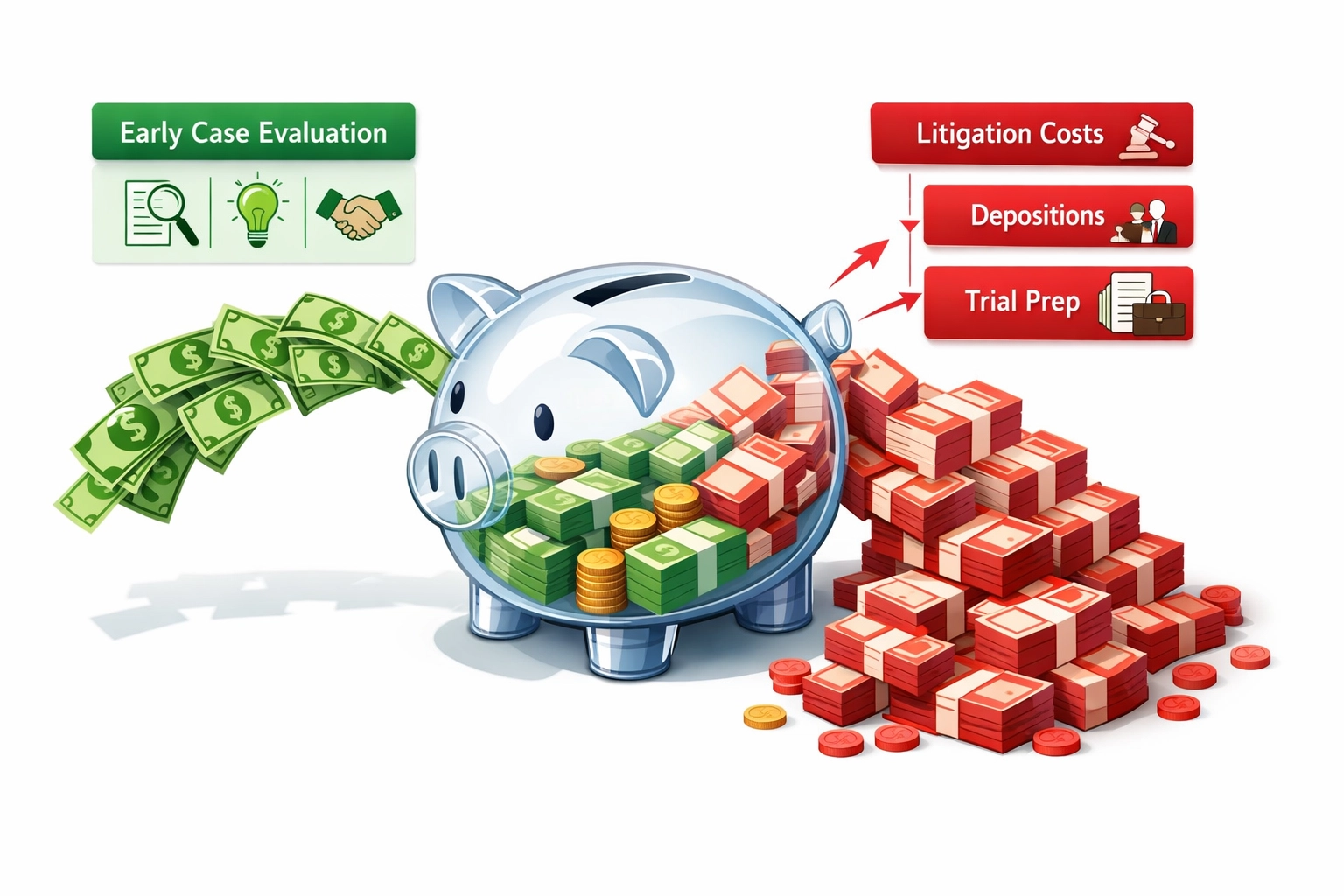
The cost of an early medical review is minimal compared to the cost of litigating a losing case. A pre-suit consultation with a legal nurse consultant might run a few hundred to a couple thousand dollars. Compare that to the tens of thousands you'll burn on discovery, depositions, and trial prep for a case that was never going to settle or win.
More importantly, early engagement creates predictable cost structures. You know upfront what your expert involvement will look like. You can budget accordingly. You can set client expectations with confidence. There are no surprise invoices six months into the case.

How to Implement Early Engagement in Your Practice
Shifting to an early-expert model doesn't require overhauling your entire practice. It just requires intentionality.
Start with case intake. Build expert consultation into your screening process. Before you sign a retainer, have a legal nurse consultant review the medical records. Get a preliminary assessment of liability and damages.
Choose strategically. Not every expert is right for every case. Evaluate credentials, experience, and communication skills. The best expert witness in the world won't help you if they can't explain complex medical concepts to a jury in plain English.
Provide complete information. Don't cherry-pick favorable records and hope your expert doesn't notice the gaps. Give them everything: including the ugly stuff. A well-prepared expert who knows the weaknesses can address them proactively. An expert who gets blindsided on cross-examination loses all credibility.
Coordinate early. Loop your expert into discovery planning. Let them identify which depositions matter most. Use their insights to craft targeted document requests. This coordination eliminates wasted effort and keeps your case moving efficiently.
The Daubert-Proof Advantage
Here's another benefit of early engagement that doesn't get enough attention: You have time to prepare for Daubert or Robinson challenges.
When you bring in an expert two months before trial, you're scrambling to establish methodology, validate qualifications, and anticipate weaknesses in their testimony. It's reactive, stressful, and risky.
When you engage an expert early, you have months: sometimes over a year: to ensure their opinions meet admissibility standards. You can conduct mock examinations, identify vulnerabilities, and refine their testimony until it's bulletproof. By the time you reach a gatekeeping hearing, you're not hoping your expert survives scrutiny: you know they will.
From Filing to Verdict: Long-Term Case Value
The impact of early expert engagement doesn't stop after case evaluation. It extends through every phase of litigation.
During discovery, your expert keeps you focused on what matters. During mediation, they provide the credibility that drives settlement value. During trial, they deliver testimony that's been refined and tested over months of collaboration.
This is especially critical in complex cases: medical malpractice, nursing home negligence, products liability, mass torts. These aren't cases you can wing with a last-minute expert. They require deep technical analysis, thorough preparation, and strategic coordination from the very beginning.
The attorneys who win these cases aren't smarter or more talented. They're just better prepared. And preparation starts the moment they decide to investigate a potential claim.
The Bottom Line
The legal landscape is shifting. The old model: investigate first, hire experts later: leaves too much to chance. It burns money on bad cases and undervalues good ones.
The proactive plaintiff approach flips that model. It prioritizes early expert engagement, validates cases before significant investment, and positions you to maximize settlement value or trial outcomes from day one.
The Maryland Model proved it works. Now it's going national: not because regulators are forcing it, but because smart plaintiff attorneys recognize a competitive advantage when they see one.
You can keep doing things the old way. Or you can start winning more, settling higher, and avoiding the cases that were never going anywhere in the first place.
Ready to build early expert review into your case intake process? Submit a case to OnPoint LNC and see how pre-suit medical review transforms your approach to litigation. We help plaintiff attorneys across the country evaluate merit, identify liability, and maximize case value( before the first complaint is ever filed.)