
When a jury returns a $70 million verdict in just 30 minutes, you know the evidence wasn't just persuasive: it was undeniable.
In the high-stakes world of medical malpractice, the difference between a defense verdict and a landmark award often comes down to a single question: Can you prove exactly when the care deviated from the standard? For the legal team representing Jessica Powell in Georgia, the answer was a resounding "yes," and they did it by weaponizing a meticulous medical timeline.
At OnPoint Legal Nurse Consulting, we see this play out every day. Attorneys come to us with "EMR dumps": thousands of pages of disorganized digital records: hoping to find the smoking gun. The Powell case is the ultimate masterclass in why you need a professional legal nurse consulting firm to bridge the gap between clinical data and courtroom victory.
The Case That Shook Georgia: The Jessica Powell Story
Jessica Powell was a preschool teacher who walked into a hospital seeking treatment for sepsis and shock. She left as a bilateral above-the-knee amputee.
The defense argued that these were unfortunate complications of a life-threatening illness. They claimed the doctors did their best in a crisis. But the plaintiff’s legal team had a different narrative, one built on the cold, hard facts of medication administration records and nursing notes.
The crux of the case involved the use of vasopressors, specifically vasopressin. While these drugs are essential for stabilizing blood pressure during septic shock, they are incredibly dangerous if not monitored with extreme precision. The evidence revealed two catastrophic failures:
- The Overdose: Powell was administered vasopressors at 2.5 times the standard maximum dosage.
- The Negligence: This excessive dosage continued for over 40 hours: long after her blood pressure had stabilized.
While the doctors were "managing" her sepsis, they were effectively starving her extremities of oxygen. By the time anyone reacted to the critical lab results showing she was developing compartment syndrome, it was too late. Her legs were dead.

Why the Jury Only Needed 30 Minutes
A 30-minute deliberation in a $70 million case is almost unheard of. It suggests that the defense's "avoidance and justifications" were completely dismantled by the facts.
How do you achieve that level of clarity? You don't just tell the jury there was an overdose; you show them the minute-by-minute progression of the error. You show them the exactly 40-hour window where the doctors failed to reassess the patient despite stable vitals.
This is where medical-legal consulting becomes your most valuable asset. When a jury can see a visual representation of a patient’s deteriorating lab values side-by-side with a physician’s failure to act, the "unfortunate complication" defense evaporates. The jury's frustration in the Powell case stemmed from the fact that the errors were clearly documented, yet the defendants refused to acknowledge them.
The EMR Dump: Where Cases Go to Die
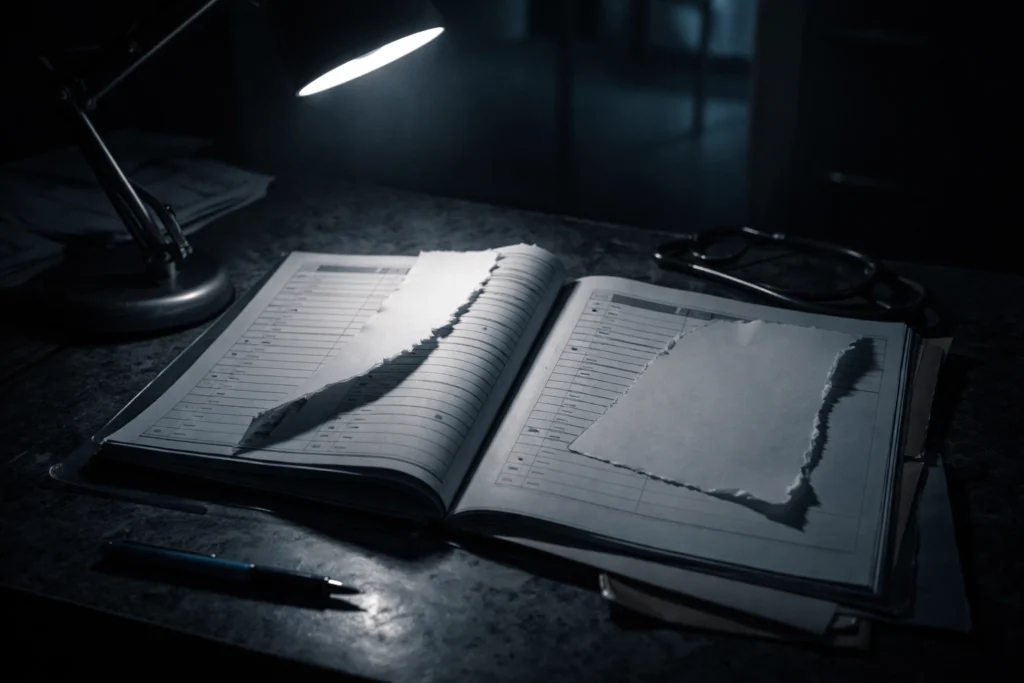
Modern Electronic Medical Records (EMRs) are designed for billing, not for legal clarity. When you receive a "dump" of these records, you are looking at a fragmented, redundant, and often intentionally confusing mess.
If you are a plaintiff attorney, you don't have time to cross-reference a medication administration record (MAR) from page 400 with a nursing flow sheet on page 2,200. But if you don't, you miss the 40-hour window that won the Powell case.
Our legal nurse services specialize in what we call "clinical forensics." We dive into the EMR to find the specific data points: the dosage errors, the missed monitoring, the ignored red-flag labs: that prove negligence. We don't just read the records; we interpret the silence between the notes.
Check out our case studies to see how we’ve helped other firms navigate these complexities.
Narrative Summaries: Turning Data into a Compelling Story
A stack of medical records is just data. A Narrative Summary is a story.
In the Powell case, the story wasn't about complex pharmacology; it was about a woman who was forgotten by her care team while a machine pumped 2.5 times the maximum dose of a dangerous drug into her system.
At OnPoint, our Narrative Summaries translate "medical-speak" into plain English. We identify the "who, what, where, and when" of the malpractice. We highlight the deviations from the standard of care so clearly that even a juror with zero medical background can identify the negligence. This is the foundation upon which you build your expert testimony and your closing argument.

Medical Chronologies: Your Blueprint for Trial
If the Narrative Summary is the story, the Medical Chronology is the blueprint.
Imagine walking into a deposition or trial with a document that hyper-links every critical event to the exact page and line in the EMR. In the Powell trial, the ability to point to the specific hour when the vasopressin should have been titrated down was the "nail in the coffin" for the defense.
Our chronologies provide:
- Sequential Clarity: We strip away the EMR noise to show the true timeline of events.
- Fact-Checking: We catch the "late entries" and "cloned notes" that defense teams use to cover their tracks.
- Critical Missing Links: We identify what isn't there, such as a missing physician's assessment or a gap in vital sign monitoring.
For cases involving personal injury or medical malpractice, a professional chronology is the most effective tool for settlement negotiations and trial prep.
Case Merit Assessment: Know Your Numbers Before You File
Not every bad outcome is a case. In the Powell matter, the legal team knew they had a winner because the medical data was irrefutable. However, many attorneys waste hundreds of thousands of dollars on experts for cases that ultimately lack merit because the "link" between the error and the injury isn't there.
This is why we recommend a Case Merit Assessment as the first step for any potential claim. We provide an honest, clinical look at the records before you commit to the high costs of litigation. We tell you if the "unfortunate complication" defense is actually valid or if there is a clear deviation from the standard of care that warrants a $70 million pursuit.

The Strategic Advantage: Why OnPoint?
You are an expert in the law; we are experts in the healthcare system. When you partner with OnPoint Legal Nurse Consulting, you aren't just hiring a "record reviewer." You are hiring a clinical strategist.
We understand the nuances of geriatrics and long-term care, surgical errors, and the complexities of hospital-acquired injuries like the ones seen in the Powell case. We know how to look for the "reperfusion injury" markers that the doctors in Georgia ignored.
By using our legal nurse consulting firm, you ensure that:
- You don't get out-muscled by hospital defense teams. They have a fleet of nurses and doctors on staff; you need the same.
- You maximize the value of your experts. By the time your physician expert sees the case, it is already organized, summarized, and ready for their signature. This saves you thousands in expert fees.
- You present a professional front. Our work product is designed to be shared with opposing counsel to drive higher settlements.
Don't Leave Your Verdict to Chance
The $70 million Jessica Powell verdict wasn't a fluke. It was the result of a legal team that understood the power of a medical timeline. They didn't let the hospital's "EMR dump" hide the truth. They used experts to track the dosage, the duration, and the reaction, turning a complex medical event into a simple story of negligence.
Is your current case hiding a $70 million truth in a pile of unorganized records? Don't wait until the discovery deadline to find out.
Whether you need a comprehensive pain and suffering analysis or a detailed chronology for a complex med-mal case, OnPoint is ready to help you win.
Ready to sharpen your case strategy? Contact us today to discuss how our legal nurse services can transform your medical records into a winning narrative. Let’s get to work on your next verdict.