

You’re staring at a stack of medical records that could fill a small library. The opposing counsel just dropped 3,000 pages of documentation, and your client’s future hinges on finding the smoking gun buried somewhere in that maze of clinical notes, lab results, and nursing charts.
This scenario plays out in law offices across the country every day. The question isn’t whether you need legal nurse consulting expertise: it’s how to get it. Should you hire an in-house legal nurse consultant or partner with an established legal nurse consulting firm?
The decision you make will directly impact your case outcomes, your bottom line, and your ability to compete with larger firms that already have this advantage locked down.
The Two Paths: Building vs Buying Expertise
Option 1: Hire In-House
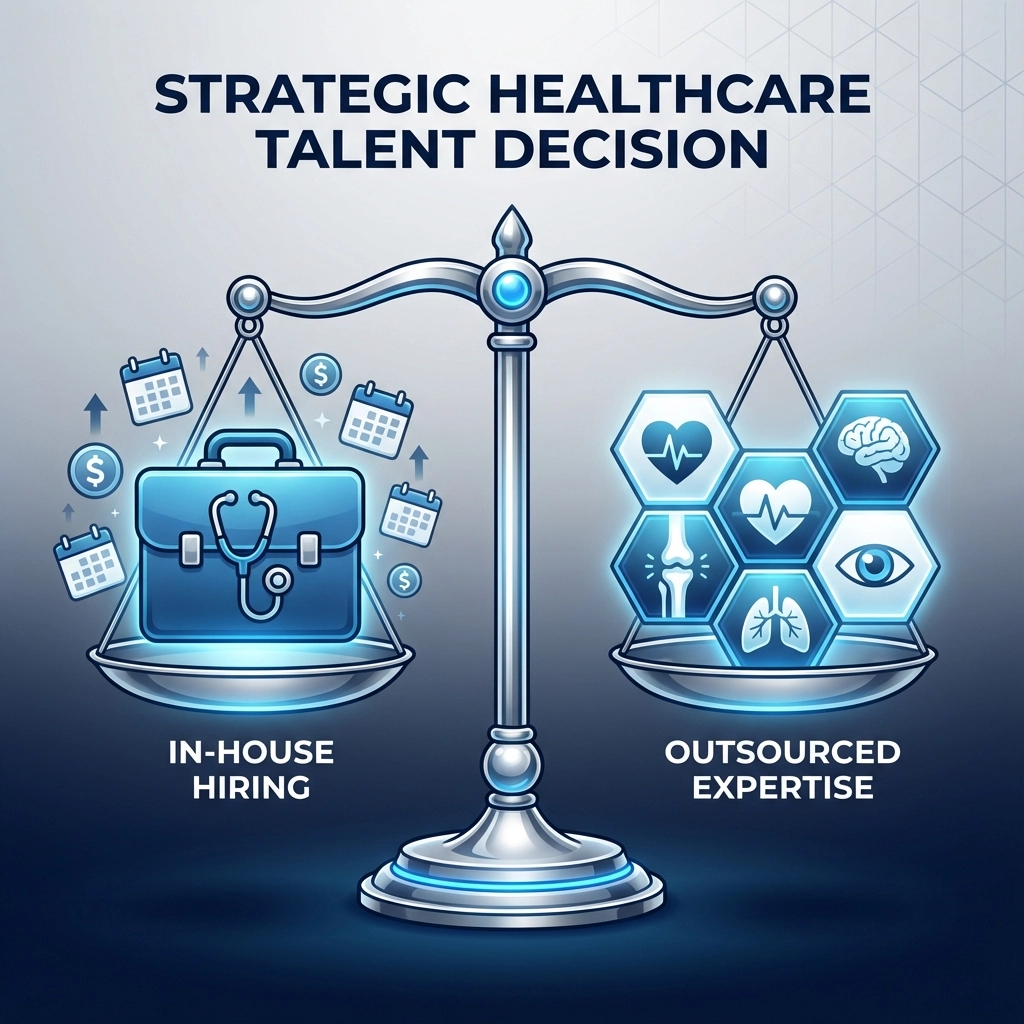
You bring a qualified legal nurse consultant onto your payroll as a full-time employee. They work exclusively for your firm, understand your processes, and are available whenever you need them.
Option 2: Partner with a Legal Nurse Consulting Firm
You outsource your medical-legal analysis to a specialized firm that provides expert services on a case-by-case basis, giving you access to multiple specialists without the overhead.
Both approaches have merit, but the right choice depends on your firm’s size, caseload, and long-term strategy.

The In-House Advantage: Control and Familiarity
When you hire an in-house legal nurse consultant, you gain immediate access and complete control over their workload and priorities. Your consultant learns your firm’s unique approach to case management, understands your preferred communication style, and becomes intimately familiar with the types of cases you handle most frequently.
Key Benefits:
- Instant availability for urgent case developments
- Deep familiarity with your firm’s processes and preferences
- Dedicated attention to your cases without competing priorities
- Direct communication without intermediaries
- Long-term relationship building with your team
However, this path comes with significant challenges that many firms underestimate.
The Hidden Costs:
A qualified legal nurse consultant commands a salary between $65,000-$95,000 annually, plus benefits, continuing education, and workspace costs. You’re looking at a total investment of $85,000-$125,000 per year before they review their first medical record.
The Specialization Problem:
Most legal nurse consultants have deep expertise in 2-3 clinical areas based on their nursing background. Your in-house consultant might excel at analyzing emergency department records but struggle with complex cardiac surgery cases or neonatal intensive care documentation. When you need expertise outside their wheelhouse, you’re back to square one.
The Outsourced Solution: Expertise on Demand
Legal nurse consulting firms offer a fundamentally different value proposition. Instead of betting on one person’s expertise, you gain access to a team of specialists, each with distinct clinical backgrounds and areas of focus.
Established firms like OnPoint Legal Nurse Consulting have spent decades building teams that cover the full spectrum of medical specialties. When your case involves complex DME issues, you get a consultant with extensive durable medical equipment experience. When you’re handling a nursing home neglect case, you work with someone who has spent years in long-term care settings.
The Scalability Factor:
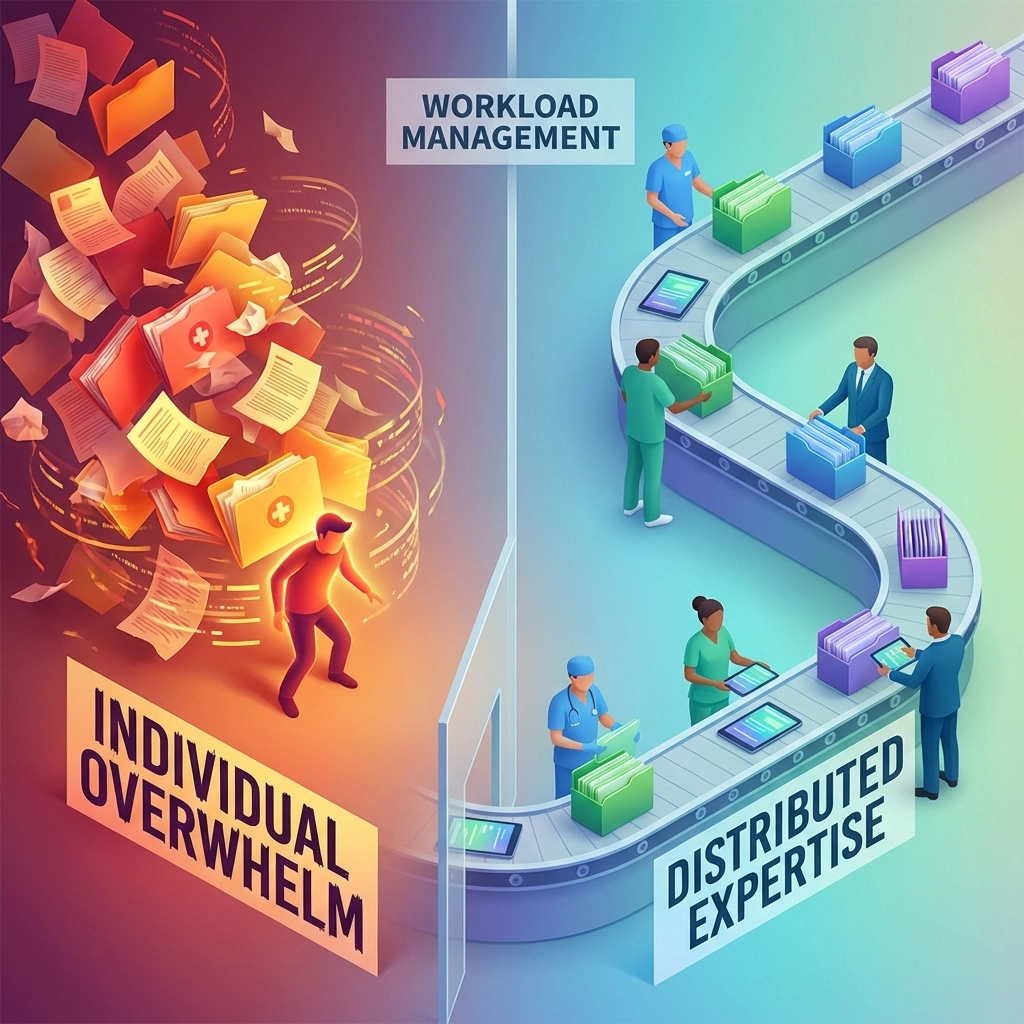
Your caseload fluctuates. Some months bring a flood of new matters, while others are relatively quiet. With an in-house consultant, you’re paying full salary and benefits regardless of workload. Outsourced services scale with your needs: you pay for what you use, when you use it.
Critical Evaluation Criteria: What Really Matters
Whether you choose in-house or outsourced, these factors will determine your success:
Turnaround Time
Medical records don’t wait for convenient schedules. Your consultant needs to deliver a comprehensive analysis within tight deadlines without sacrificing quality. In-house consultants offer immediate availability, but outsourced firms often provide faster turnaround through multiple team members working in parallel.
Clinical Expertise Depth
Generic nursing experience isn’t enough. You need consultants with specific expertise in the medical areas relevant to your cases. A cardiac ICU nurse brings different insights than a pediatric emergency department nurse. The breadth of available expertise often favors established consulting firms over individual hires.
Record Retrieval and Organization
Medical records arrive in chaos. Effective legal nurse consultants don’t just analyze: they organize, index, and create searchable databases that make information accessible throughout litigation. This infrastructure requirement often exceeds what individual consultants can provide.
Missing Records Identification
Experienced consultants know what should be in a medical record and what’s conspicuously absent. They identify gaps that could indicate destroyed evidence, incomplete documentation, or missing critical information that could make or break your case.
Trial Support Capabilities
Cases that go to trial demand different skills than those that settle. Your consultant needs to create compelling chronologies, assist with expert witness coordination, and potentially testify themselves. Trial experience varies dramatically between individual consultants and established firms.
The Decision Matrix: Choosing Your Path
Here’s a practical framework for making this decision:
Choose In-House When:
- Your annual legal nurse consulting needs exceed $120,000 in outsourced costs
- You handle 50+ medical-related cases annually
- You specialize in 1-2 specific medical areas (e.g., birth injury, hospital malpractice)
- You have dedicated space and infrastructure for an additional team member
- Case timing is unpredictable and requires immediate availability
Choose Outsourced When:
- You need access to multiple medical specialties
- Your caseload varies significantly month-to-month
- You handle complex cases requiring specialized expertise
- You want predictable, case-by-case costs
- You need established relationships with medical experts
- Trial graphics and demonstrative evidence creation are important
Beyond the Basics: Advanced Considerations
- Technology Integration
Modern legal nurse consulting relies heavily on digital tools for record management, analysis, and reporting. Established firms invest in proprietary software and databases that individual consultants typically cannot afford. This technology gap can significantly impact efficiency and thoroughness. - Continuing Education Requirements
Medical standards evolve rapidly. Legal nurse consultants must stay current with clinical practices, regulatory changes, and emerging medical technologies. Consulting firms typically provide structured continuing education programs, while in-house consultants require individual professional development budgets and time allocation. - Malpractice and Professional Liability
Professional errors in medical record analysis can devastate cases and expose firms to malpractice claims. Established consulting firms carry professional liability insurance specifically covering legal nurse consulting services. Individual consultants may have gaps in coverage that could expose your firm to additional risk.
The Geographic Reality Check
Searching for “legal nurse consultants near me” reflects a natural preference for local expertise. However, medical record analysis doesn’t require physical proximity. The most qualified consultant for your specific case might be across the country, not across town.
Technology enables seamless collaboration regardless of location. Video conferences, secure file sharing, and digital collaboration tools eliminate geographic barriers while expanding your access to specialized expertise.
Making the Smart Investment
The legal nurse consulting decision ultimately comes down to strategic resource allocation. In-house hiring makes sense for firms with consistent, high-volume needs in specific medical areas. Outsourcing provides flexibility, specialized expertise, and cost predictability for most other scenarios.
Consider your firm’s trajectory over the next 3-5 years. Are you growing into new practice areas? Expanding your medical malpractice practice? Taking on more complex cases that demand diverse medical expertise? These factors should drive your decision more than immediate cost considerations.

Your Next Step Forward
The medical-legal landscape grows more complex every year. Electronic health records, telemedicine, new medical devices, and evolving standards of care create both opportunities and challenges for legal practitioners.
OnPoint Legal Nurse Consulting has been bridging medicine and law since 1995, providing the specialized expertise that transforms medical records from confusing documents into powerful legal tools. Our clinically active experts bring over 25 years of experience to your most challenging cases.
Whether you’re evaluating a potential personal injury case, navigating complex workers’ compensation claims, or building your mass tort practice, the right legal nurse consulting partnership can be the difference between settling for less and securing the outcomes your clients deserve.
The choice between in-house and outsourced legal nurse consulting will shape your firm’s capabilities for years to come. Choose wisely, and choose partners who understand that your success is their success.
Ready to explore how legal nurse consulting can strengthen your practice? Contact us to discuss your specific needs and learn how OnPoint Legal Nurse Consulting can support your most important cases.