
A bombshell ruling from Maryland's highest court just changed the game for medical malpractice attorneys nationwide. On July 29, 2025, the Supreme Court of Maryland delivered a decision in Canton Harbor Healthcare Center, Inc. v. Robinson that significantly expands when registered nurses can serve as expert witnesses: and more importantly, what they can testify about.
This isn't just another incremental court ruling collecting dust in legal databases. This decision fundamentally shifts how you can approach nursing home cases, pressure ulcer litigation, and any medical malpractice case where nursing care standards are central to your theory of liability.
What the Court Actually Ruled
Here's what makes this ruling revolutionary: The Maryland Supreme Court held that registered nurses can now provide Certificates of Qualified Expert (CQE) attesting that a breach of nursing care standards proximately caused an injury: not just describe what went wrong.
Previously, many jurisdictions limited nursing experts to essentially being fancy fact witnesses who could describe clinical conditions but couldn't connect the dots on causation. The Robinson court threw that limitation out the window.
The court established two critical principles:
First, registered nurses meet the "peer-to-peer" requirement to attest to breaches of nursing care standards. This makes sense when you think about it: who better to evaluate nursing care than another nurse?
Second, and this is the game-changer: nurses can opine on proximate causation when they rely on pre-existing diagnoses and stay within their scope of practice. They can't make medical diagnoses, but they absolutely can connect nursing negligence to patient harm.

Why This Decision Matters Beyond Maryland
You might be thinking, "This is great for Maryland attorneys, but what about the rest of us?" Here's why this ruling has nationwide implications, even if you never set foot in a Maryland courtroom.
Court decisions don't exist in vacuums. When a state supreme court issues a well-reasoned opinion expanding expert witness qualifications, other jurisdictions take notice. The Robinson court's analysis focuses on the distinct expertise nurses bring to healthcare: expertise that doesn't magically disappear at state lines.
The court recognized that nurses have primary responsibility for certain clinical functions that were previously lumped under "medical care" requiring physician experts. In nursing home settings specifically, the court found that pressure ulcer prevention falls squarely within nursing's domain based on federal regulations, state statutes, and facility policies.
This logic applies far beyond Maryland's borders. Federal nursing home regulations are uniform across states. CMS requirements for nursing assessments, care planning, and intervention don't change based on geography. If pressure ulcer prevention is primarily a nursing function in Maryland, it's primarily a nursing function everywhere.
The Pressure Ulcer Revolution
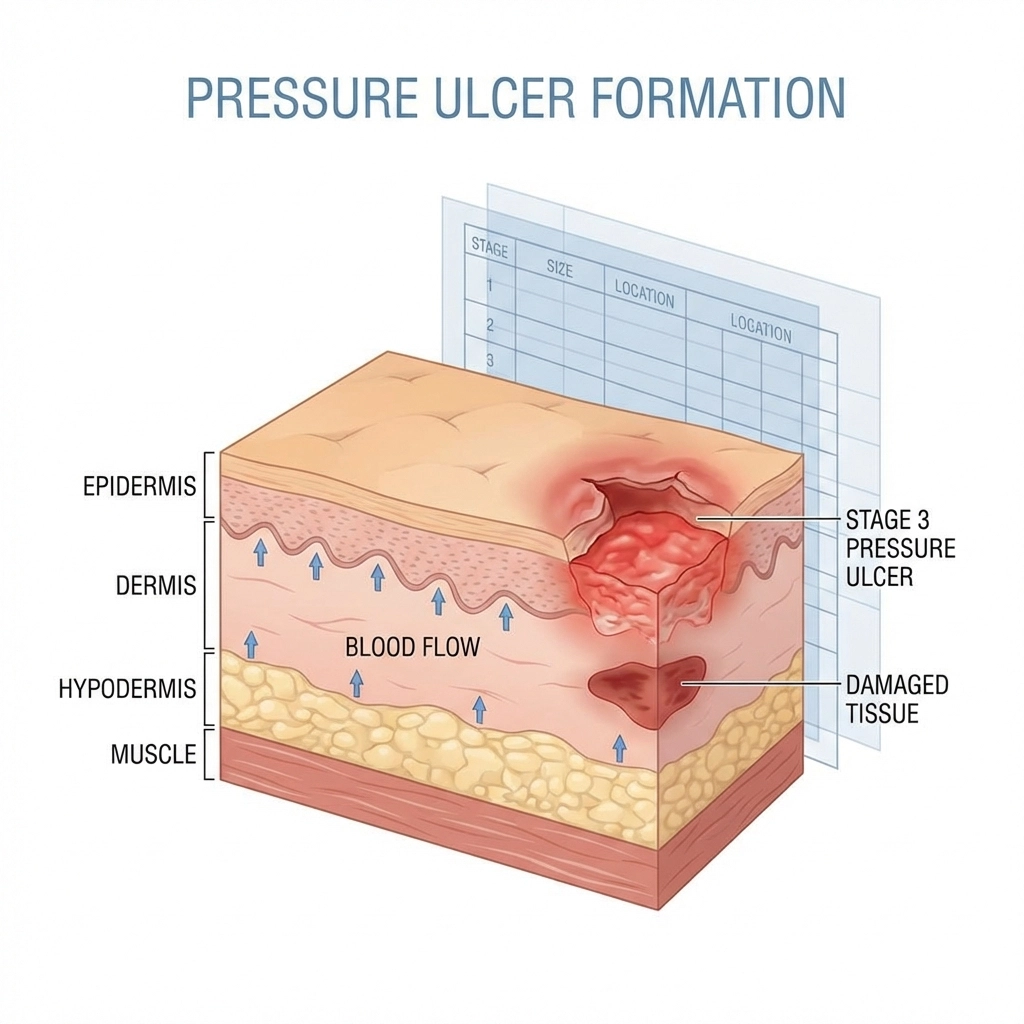
Let's get specific about where this ruling creates immediate opportunities. Nursing home pressure ulcer cases just became significantly more accessible.
Before Robinson, many attorneys struggled with the expert witness requirements in these cases. You often needed expensive physician experts to testify about causation, even when the core negligence involved basic nursing care: turning schedules, skin assessments, documentation failures, and care plan implementation.
The Maryland court recognized what experienced nursing home attorneys have always known: pressure ulcer prevention is fundamentally about nursing care. The court noted that nurses "perform assessment, treatment planning, and outcome evaluation" and these functions "implicitly require registered nurses to assess the probable cause of further injury if nursing intervention is unsuccessful."
This opens doors for cases where you have clear nursing negligence but questionable medical complexity. A registered nurse expert can now potentially testify that failure to follow turning schedules, inadequate skin assessments, or poor care plan implementation proximately caused a resident's pressure ulcers.
Earlier Case Screening = Better Outcomes
This ruling transforms your case evaluation process. Instead of immediately reaching for expensive physician experts, you can now screen cases with qualified nursing experts who can assess both breach of standard and causation.
This is particularly valuable for cases that might have seemed marginal under the old framework. How many potential nursing home cases have you passed on because the medical expert costs seemed prohibitive relative to damages? Now you can evaluate these cases with nursing experts who understand the regulatory landscape and can speak directly to causation.
Smart attorneys will use this opportunity to cast a wider net during initial case screening. A qualified legal nurse consultant can help identify which cases benefit from this expanded nursing expert testimony and which still require physician experts for medical diagnosis issues.
Documentation and Regulatory Standards Take Center Stage
The Robinson decision also elevates the importance of regulatory compliance in your litigation strategy. The court explicitly relied on federal regulations, state statutes, and facility policies to determine that pressure ulcer prevention is primarily a nursing function.
This regulatory foundation becomes crucial for your causation narrative. Nursing experts can now testify not just about clinical standards of care, but about how regulatory violations directly contributed to patient harm. They can connect dots between missing assessments, inadequate care plans, and poor outcomes in ways that were previously off-limits.
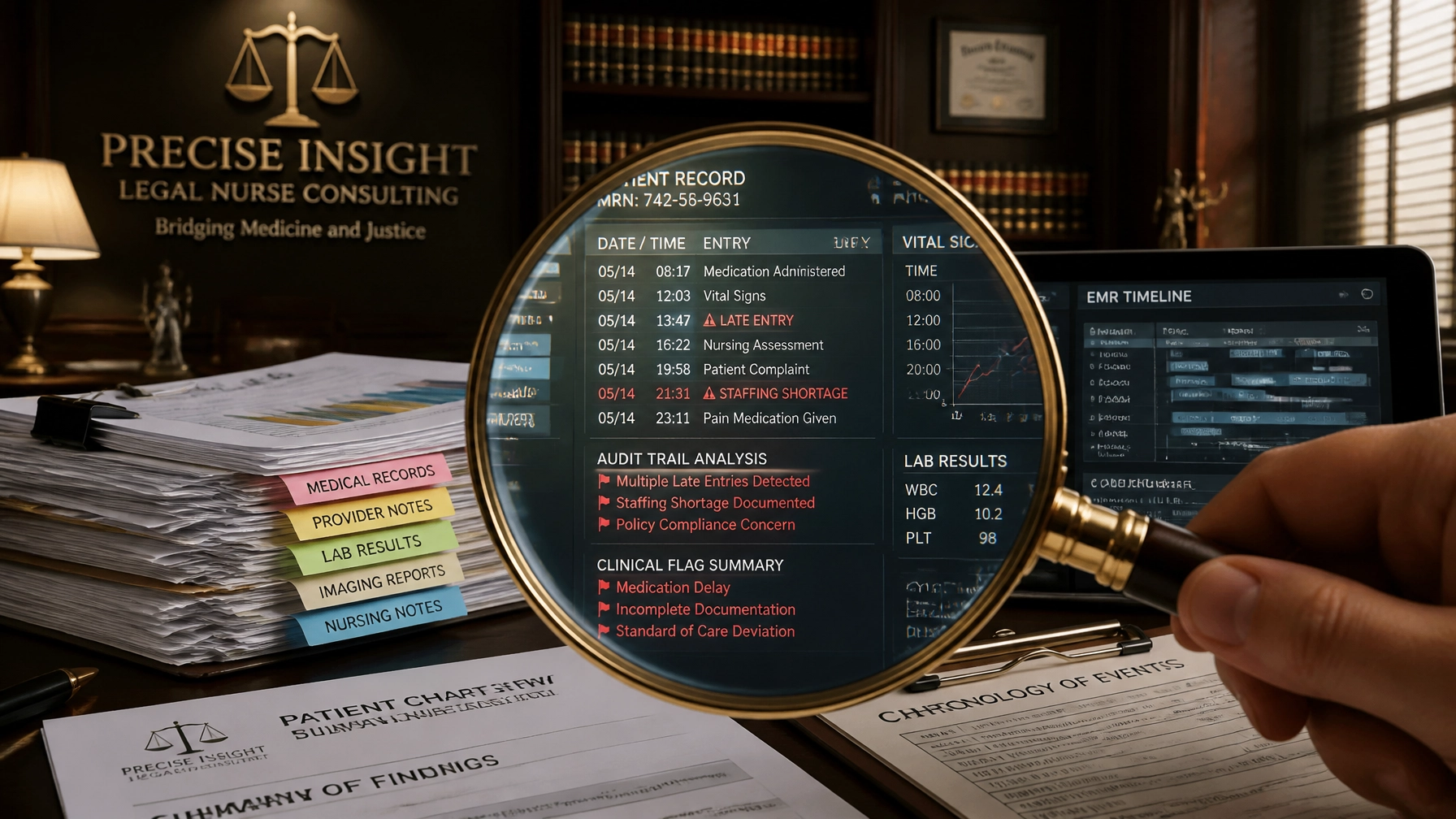
Your legal nurse consultants become even more valuable in identifying these regulatory violations and the records that document them. They know where to look for the missing skin assessments, the incomplete care plans, and the documentation gaps that support your causation theory.
Building Your Expert Strategy
The Robinson ruling doesn't eliminate the need for physician experts in complex cases: it gives you more strategic options. You can now use nursing experts for nursing negligence issues and reserve physician experts for medical diagnosis and treatment questions.
This tiered approach can significantly reduce expert costs while strengthening your overall case presentation. Juries often relate better to nursing experts who can explain basic care failures in plain language than physician experts discussing complex medical theories.
The key is knowing when nursing expert testimony is sufficient and when you still need physician experts. A qualified legal nurse consultant can help you navigate these decisions by reviewing records and identifying the real issues in each case.

The Daubert/Frye Consideration
Here's an important caveat: the Robinson ruling addresses certificate requirements under Maryland's Health Care Malpractice Claims Act, not general expert witness admissibility under Daubert or Frye standards.
Just because a nursing expert can provide a certificate doesn't automatically mean their testimony will be admissible at trial. You still need to satisfy your jurisdiction's reliability and relevance standards for expert testimony.
However, the court's analysis of nursing expertise and scope of practice provides strong support for Daubert challenges. When the Maryland Supreme Court recognizes that nurses have primary responsibility for specific clinical functions and the expertise to assess causation in those areas, that reasoning translates well to general admissibility arguments.
What This Means for Your Practice
Smart plaintiffs' attorneys should be reassessing their approach to medical malpractice cases, particularly in nursing home settings. Here are the practical implications:
Case evaluation becomes more efficient. You can screen more cases with nursing experts before committing to expensive physician expert fees.
Your expert budget goes further. Using nursing experts for appropriate issues reduces overall expert costs and makes smaller cases economically viable.
Regulatory violations become more powerful. Nursing experts can directly connect regulatory violations to patient harm in ways that strengthen your causation narrative.
Documentation review becomes more targeted. Legal nurse consultants can identify the specific records and violations that support nursing expert testimony.
The Broader Implications
The Robinson decision reflects a growing recognition of nursing expertise in healthcare litigation. Courts are beginning to understand that the medical model doesn't capture the full scope of healthcare delivery, and that nursing brings distinct knowledge and skills to patient care.
This trend is likely to continue as healthcare becomes increasingly complex and specialized. Nursing roles continue to expand, and courts will need to recognize the expertise nurses bring to different aspects of patient care.

Working with Legal Nurse Consultants
This ruling highlights the critical role legal nurse consultants play in building successful medical malpractice cases. They can help you:
- Identify cases where nursing expert testimony is sufficient versus cases requiring physician experts
- Locate and analyze the specific records that support your causation theory
- Connect regulatory violations to patient harm through detailed record analysis
- Screen potential nursing experts for appropriate qualifications and experience
- Develop case themes that leverage nursing expertise effectively
At OnPoint Legal Nurse Consulting, we specialize in helping attorneys navigate these complex expert witness decisions. Our team understands both clinical standards and legal requirements, giving you the strategic advantage you need in medical malpractice litigation.
Important Disclaimers
This analysis is based on a Maryland Supreme Court decision and may not apply in your jurisdiction. Expert witness requirements vary significantly between states, and you should consult local law and precedent before relying on nursing expert testimony in your cases.
This blog post is not legal advice and should not be substituted for consultation with qualified legal counsel about specific cases or strategy decisions.
Ready to Leverage This Opportunity?
The Robinson ruling creates new strategic opportunities for medical malpractice attorneys, but success depends on understanding how to apply these principles to your specific cases and jurisdiction.
Our legal nurse consulting team stays current on developments in expert witness law and can help you evaluate how this ruling might impact your cases. We provide comprehensive case analysis, expert identification, and strategic consulting to help you maximize the value of every medical malpractice case.
Ready to explore how this ruling might benefit your practice? Contact OnPoint Legal Nurse Consulting today for a consultation about your current cases and expert witness strategy. We're here to help you turn legal developments into litigation advantages.